
BrowserStack alternatives for real Android testing
Teams usually search for an alternative when they want less friction, clearer access to real devices, or a setup that better matches their testing, demo, support, or BYOD deployment workflow.
Teams do not buy access for its own sake. They buy confidence and speed.
If the platform does not help you reproduce issues quickly, validate releases clearly, and get the right device when you need it, the workflow starts to feel expensive even before pricing enters the conversation.
Searching for a BrowserStack alternative in Canada or anywhere else usually means your team has reached a practical limit with the current workflow. Maybe you need better visibility into real Android behaviour. Maybe you need a more dedicated setup. Maybe your use case extends beyond QA into demos, support, operations, or regional validation.
Start with the actual job to be done
Before comparing features line by line, define what your team is trying to accomplish. A mobile QA team, a product demo team, and a BYOD deployment team may all need real devices, but not for the same reason.
- Release testing: Validate core user journeys before updates ship.
- Bug reproduction: Recreate issues on specific Android models and OS versions.
- Sales demos: Show the app on real hardware instead of a polished mockup.
- Support workflows: Confirm customer-reported device issues quickly.
- BYOD or private lab: Use a more controlled device environment for team-specific needs.
Key things to compare
If your team cares about real Android coverage, these are the categories that usually matter most.
- Real device access: Can the team quickly launch into actual Android devices instead of a complicated session flow?
- Practical device mix: Are the models relevant to the issues your users report and the regions you serve?
- Session clarity: Is the device stream easy to read, interact with, and share across product, QA, and support teams?
- Dedicated options: Can you move from public cloud access to a more controlled lab when needed?
- BYOD support: If you have your own device inventory, can it become part of a usable remote workflow?
When a simpler platform is the better fit
Many teams do not need a massive enterprise process. They need a clean way to open the right Android phone, verify the problem, and move on. That is especially true for startups, agencies, mobile growth teams, and customer-facing operations groups.
A lighter workflow can be better when you need:
- Fast access for ad hoc validation
- Real hardware for onboarding, login, or payment checks
- A platform that works for demos and operations, not just QA
- A path toward dedicated labs or contributor-powered inventory later
How CaIoT differs
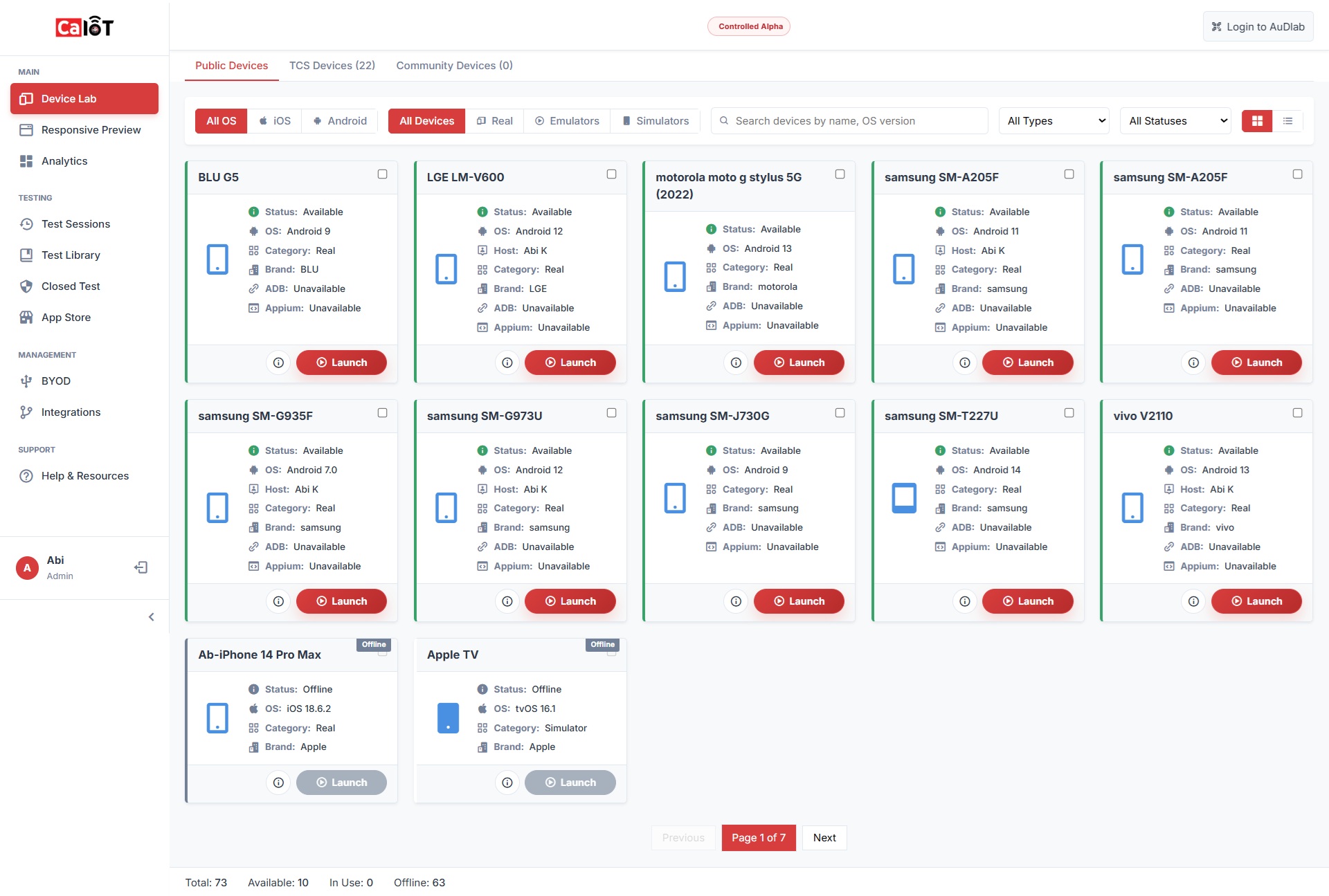
CaIoT focuses on real Android devices in the cloud with a practical user journey. DeviceLab supports on-demand access, dedicated environments, stronger control, predictable coverage, and BYOD-style setups.
That makes CaIoT useful not only for testing, but also for remote demos, validation, customer support, app operations, AI-assisted checking workflows, and private deployment paths.
Why this matters for teams in Canada
Canadian teams often want a platform that feels more direct and adaptable than a rigid one-size-fits-all approach. If you need a real-device cloud with room to grow into dedicated or BYOD models, that comparison becomes especially important.
FAQ: BrowserStack alternatives
What is the main reason teams look for an alternative?
Usually they want a workflow that better fits their day-to-day needs, whether that means simpler device access, more relevant hardware, or more flexible deployment options.
Is this only for QA teams?
No. Product managers, support teams, sales engineers, and operations teams often need real Android devices too.
What if I need a private or dedicated setup later?
That is why it helps to choose a platform with both public cloud and dedicated lab options, rather than starting over when your needs mature.
Can BYOD be part of the strategy?
Yes. If your organization has spare Android inventory, a BYOD-style DeviceLab can be a strong way to add capacity and control.
Also see: AWS Device Farm alternative, why real device testing matters, and why VPN-only validation is often not enough.
Compare based on real workflow, not just brand recognition.
Use DeviceLab for direct access now, then scale toward a more dedicated DeviceLab model when your team needs it.